
Meet the Team: Cyndi Newman, MSHL, BSN, RN
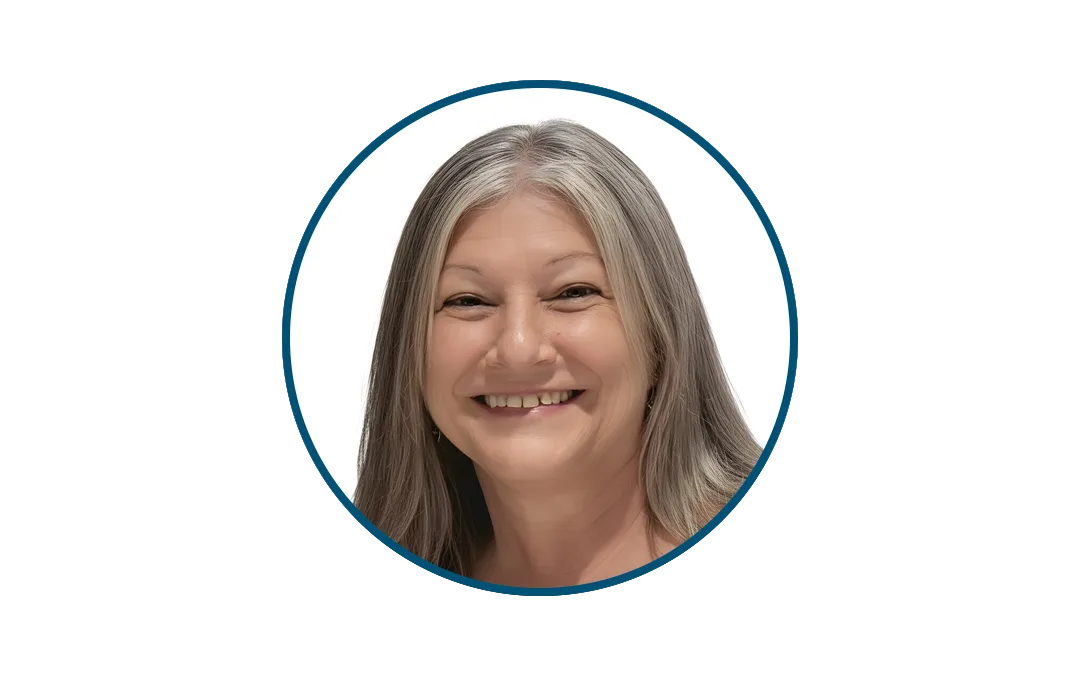
Cyndi Newman is an ACHC Surveyor & Senior Clinical Review Specialist for office-based surgery and ambulatory surgery centers. She is passionate about quality patient care and the collaborative nature of accreditation. In this interview, Cyndi draws from over 30 years of experience as a registered nurse, surveyor, and risk manager to offer insightful, actionable tips for office-based surgery practices seeking compliance with accreditation standards.
Posted: January 15, 2026
INTERVIEWER:
Cyndi, for our readers who aren’t familiar with office-based surgery, how would you define it?
CYNDI:
It’s an outpatient procedure that can be conducted in an “office,” typically in a physician’s office suite. Think of cataract surgery in an ophthalmology office, or GI-type procedures like colonoscopy scoping… Or procedures that take place in a dermatologist’s or dentist’s office… For the purposes of accreditation, it’s a setting where you’re sedated, but at level 1 or 2 where you can still respond purposefully to a verbal command.
Essentially, you can walk out of the building when it’s done. You may feel groggy and need someone to drive you home, but you don’t need the same level of post-surgery recovery that you do in a hospital, or even an ambulatory surgery center.
OBS patients undergo a minimal to moderate amount of sedation. “Minimal to moderate” levels are often defined by the state. That’s why ACHC OBS Accreditation Standards are cross-walked with several states, so we can show how our standards meet their requirements.
INTERVIEWER:
That can get tricky, right? Because there are 50 states…
CYNDI:
Well, office-based surgery isn’t regulated in every state.
Outpatient surgery providers—both in a physician’s office and in an ambulatory surgery center—are tremendously invested in patient outcomes. Positive outcomes are a reflection of a provider’s work and practice. They demonstrate a commitment to patient safety and quality care. But to get those positive outcomes, they need a set of standards to follow. That’s why accreditation is so important.
As an ACHC Surveyor… We’re not expected to just “go in and do the job.” We’re encouraged to spend the time providing the education that these organizations need. It’s very rewarding.
INTERVIEWER:
How can standards ensure a level of safety or quality that a non-accredited practice may be overlooking? For example, let’s say an OBS practice isn’t following a set of accreditation standards…
CYNDI:
Infection control is the first thing that comes to mind. If you’re not following nationally recognized guidelines for sterile processing of instruments, that’s a big problem.
We see this sometimes with dental practices, for example. Dental practices aren’t always thinking about sterile processing in the same way as other surgery providers. Because they’re working in the mouth, and the mouth isn’t considered to be “sterile.” But that doesn’t mean you’d want to put a contaminated instrument inside the mouth! Those instruments have a high potential for cross contamination. If the previous patient had some type of illness or infection, and the instruments weren’t perfectly sterilized between procedures, that illness could easily pass that on to the next patient.
INTERVIEWER:
But… they are sterilizing their instruments, right?
CYNDI:
Yes, of course! But to what standard? What’s the measure of quality? Are sterilization practices observed? Are competencies in place?
A dental assistant is usually sterilizing the equipment. During an accreditation survey, we’ll evaluate their knowledge and training history. We’ll look at competency evaluations. And if more training is needed, we’ll offer resources…An ACHC Surveyor may say, “Here’s a sterile processing course you could take,” or, “You might want to provide this type of equipment for your people doing the sterile processing.”
It’s incredibly satisfying to help providers improve and evolve. That’s exactly why I got into this field.
INTERVIEWER:
Have you always worked in accreditation?
CYNDI:
No, but I worked in quality for many years. I’m a registered nurse, and I started out in a hospital working with bone marrow transplant patients. I became very attached to my patients, and I developed a deeply personal interest in their outcomes. So I asked to be part of the hospital’s quality committee for transplants… That’s really when I developed a passion for quality in general.
Then I eventually got my master’s degree in health law, which led to working in risk management. I’d meet with the medical director and say, “This incident happened. What are we going to do about it? How can we make this better?” I loved making process improvements in a hospital setting, but I wanted to make improvements on a bigger scale.
So, I became a surveyor for the state of Florida. I surveyed hospitals, surgery centers, and psychiatric facilities. I just fell in love with surveying. One day I happened to be looking online, ACHC was hiring surveyors… and the rest is history. Now I’m a clinical review specialist and a surveyor, but I do lean more towards surveying. I love going out, discovering what different organizations are doing, comparing what’s working and not working, sharing tips…
INTERVIEWER:
Speaking of sharing tips… Many OBS practices have a small staff. One team member may be wearing many hats. Do you have any tips for these practices as they seek accreditation? Knowing that they’re working towards compliance while facing limitations of staff and budget?
CYNDI:
First and foremost, accreditation is 100% attainable. Even for the smallest practice. You can do this. To that end, here’s my advice:
1. Get organized. That’s the key. You have to be super organized with your files, your documentation, your manuals… Otherwise you’re wasting time looking for things, trying to find things. (“Oh, I know we have a policy for that, but I’m not sure where it is.”) Establish your systems upfront and stick to them.
2. Automate as much as possible. Use automated calendar notifications whenever you can. This is especially useful for credentialing schedules, and life safety reminders for inspection of equipment, too.
3. A lack of digital solutions isn’t an obstacle. Many office-based practices still use paper and are quite analog. Recently, I surveyed an organization, and the director of nursing had a big whiteboard in her office. Because there’s so many things that are due at periodic points—weekly, monthly, quarterly, annually, 5 years. She tracked everything on that whiteboard. She didn’t need a computer to maintain compliance.
4. Eliminate guesswork with checklists. Checklists are great tools. Staff can simply move down the list. “Is this in the chart?” “Is this in the file?” Check, check, check. Creating checklists may take some work upfront, but if you set yourself up for success, it’s going to pay huge dividends for your organization.
5. You need support, and that support doesn’t have to be in the form of an employee. The support could come from outside resources like AORN, or other organizations, depending on your specialty. Get in their group chats. Ask questions. “Can you share some worksheets? Can you share your checklist with us?”
And don’t be afraid to reach out to practices in your area, whether they’re in your specialty or something else. Think about something like sterilization. Sterilizing is sterilizing; lots of specialties do it. Connect with other providers and explain you’re looking to implement a policy or procedure. Ask them what they do and how it’s working for them.
INTERVIEWER:
That’s a solid list! Cyndi, thanks so much for meeting with me today. I learned so much! Do you have any parting words?
CYNDI:
As an ACHC Surveyor, I feel like I’m making the biggest impact I possibly can on both patient safety and quality. We’re not expected to just “go in and do the job.” We’re encouraged to spend the time providing the education that these organizations need. It’s very rewarding.
—
Read more articles about Office-Based Surgery Accreditation here.