
Meet the Team: Chris Wetzel
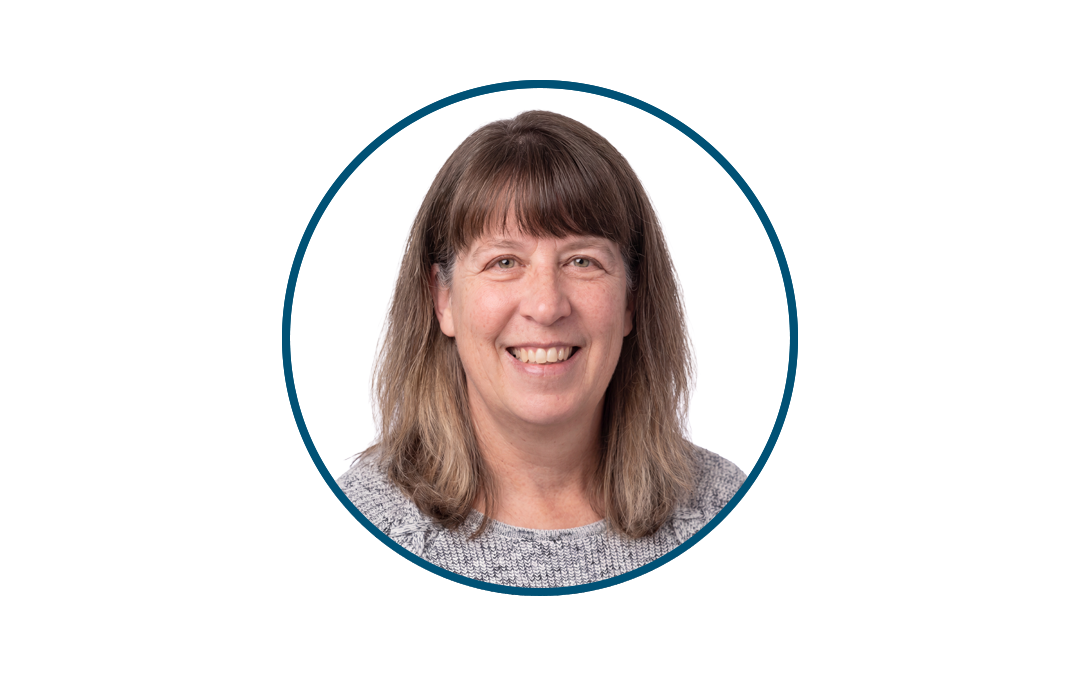
Chris Wetzel is involved with all facets of ACHC Clinical Laboratory Accreditation, including surveying and the development of standards. She also oversees client proficiency testing, CMS reporting, and educational webinars.
In the latest installment of our "Meet the Team" interview series, Chris speaks about her passion for quality improvement and her commitment to an educational approach. She also covers common compliance challenges and offers a few tips along the way.
Posted: July 22, 2026
Chris, what's the best part about being an ACHC Surveyor?
I really enjoy helping our customers solve problems through sharing knowledge. I’ll review a phenomenal policy at a lab, for example, and I’ll ask if they’re willing to share it with me so I can help other labs down the line. Sure enough, I’ll encounter another lab struggling with that same policy, and then I can say, “Look, here’s a great example for you.”
Collaboration is vital to our collective improvement as healthcare providers, which in turn is essential to patient safety. And patient safety is the most important thing. As a former safety officer, I’ve seen firsthand how sharing knowledge supports better processes and better care.
How else does your background inform your role at ACHC?
I spent some time traveling and working the bench in all sorts of locations. I had a new job every 2 years, so I gathered fresh perspectives and kept up with new developments out in the field. Being a surveyor ticks those same boxes in a lot of ways.
I worked my way up to being a lab director in a 90-bed hospital, plus we had 10 outpatient clinics sending their lab work to us. I was responsible for compliance with accreditation standards, state regulations, NFPA, you name it. And of course I was very involved with quality improvement.
Many ACHC customers are challenged by quality improvement standards. Is the same true for labs?
I find that labs understand the general premise of continuous improvement, but they have a hard time identifying what to measure. So I ask them, “What are your problem spots? Is it hemolyzed draws from the ER? Unsuccessful blood gas? Turnaround time?” Turnaround times are a great place to start.
ACHC Standards don’t dictate that a lab must measure a specific number of things. We do ask labs to cover the preanalytical phase, the analytical phase and the post-analytical phase. We want to see that a test is being measured from beginning to end, whether it’s reviewing test results or reports, or the quality of the draw. Or, are the orders correct? In many labs, someone is transcribing a paper order into a computer, so that’s definitely a good place to audit for accuracy.
Whatever the lab comes up with, we want them to find true value in their improvement efforts, beyond just fulfilling a requirement. We want their Quality Assurance Program to be meaningful and useful.
Collaboration is vital to our collective improvement as healthcare providers, which in turn is essential to patient safety. And patient safety is the most important thing. As a former safety officer, I’ve seen firsthand how sharing knowledge supports better processes and better care.
In your experience, which ACHC Standard is the most challenging for our customers?
I'd have to say 06.02.01: Essential Conditions. It's a complex standard that encompasses many areas, and that’s precisely why it’s challenging. A laboratory can meet most of the standard, but it only takes a couple of areas of noncompliance to become a deficiency.
The standard applies to the environment—the temperature, the humidity, and the water—but I think what people forget is that we’re talking about the entire lab, and everything in it.
Take monitoring humidity, for instance.
Many labs have a wide humidity range of 10-85%. But they need to consider every aspect of the environment, including the instruments. They may have 10 different instruments in a particular area, and those have 10 different environmental requirements. So, they need to maintain the environment to meet all of those instrument requirements, which might encompass a humidity range of 30 to 70. Or, sometimes instruments change, and they haven't updated their humidity requirements.
What makes ACHC Clinical Laboratory Accreditation unique?
I’ve been in healthcare for over 30 years, and I’ve worked in a variety of settings. So I feel especially qualified to answer this question! There are other laboratory accreditors out there, it’s true. And to an extent we have similar goals. CLIA is CLIA, and the regs are the regs.
However!
I think ACHC is unmatched in three primary ways:
1. ACHC Standards aren’t prescriptive. Some accrediting organizations say, “You must have this policy, and you must do it exactly this way.” We say, “Here’s the standard, and you need to meet it. How you meet it is unique to you. As long as you’re meeting it, you’re compliant.” Then we help every lab find what works best for them.
2. We're consistent and objective. Our team is trained to survey standards in a consistent manner. We don’t want laboratories to feel that every time they are surveyed, they are being told something different. When you’re surveyed by ACHC, you’re getting the perspective of laboratorians who have seen dozens, if not hundreds, of settings and facilities.
3. Expertise. Our team is made up of seasoned professionals from diverse backgrounds. We’ve personally worked in small hospitals, large systems, provider offices, the military, and more. If one of us is unfamiliar with a scenario, someone else on the team is going to have deep knowledge on the topic. I truly think we provide the best possible experience for labs seeking accreditation
Chris, how can laboratories contact you with questions about clinical compliance and ACHC Accreditation?
If you're already working with an ACHC Account Advisor or Customer Care Specialist, let them know you’d like to speak to a member of the clinical team. Or, you can email customerservice@achc.org. They’ll be happy to connect you with us. Don’t hesitate to reach out! We enjoy hearing from you.
--
Read more articles about Clinical Laboratory Accreditation here.