Meet the Team: Susan Mills, RN
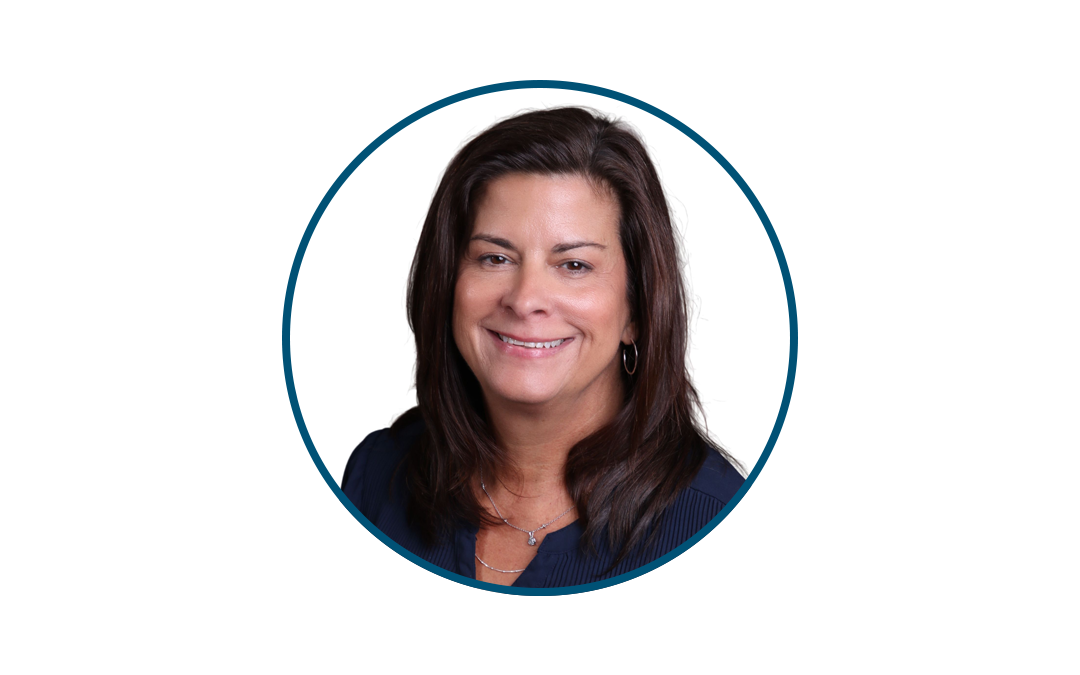
Susan Mills worked more than three decades as a registered nurse serving home health and hospice organizations. In her current role at ACHC, she guides Hospice, Home Health, and Home Infusion Therapy Accreditation. She also manages ACHC staff who oversee Assisted Living, Behavioral Health, Home Care, Palliative Care, and Renal Dialysis Accreditation.
We sat down with Susan to talk about her career, her journey at ACHC, and a few things you can only learn after stepping inside a patient's home.
Posted: October 21, 2026
Susan, like many nurses, you started your career in a hospital. What led you to home health?
I was working as a manager at a hospital, and one of our PRN nurses worked in home health. She kept telling me I should give it a try.
At first, I thought, "Isn't that where people go when they can't hang in the hospital?" I couldn't have been more wrong.
I decided to try it, and after my very first home visit, I fell in love with it. I spent the majority of my nursing career in home health after that.
What was so different about caring for patients in their homes?
In the hospital, you take care of patients, get them stable, explain their medications and discharge instructions, and send them home. But you don't necessarily know what happens once they get there.
When you visit someone's home, you realize those instructions might not work for their situation. Maybe there are 15 dogs in the house, no running water, or no family member to help them. Those are things you might never know from the hospital, but they can make a big difference in how you approach someone's care.
Take someone with diabetes. You explain the diet they need to follow and the medications they should take. They might tell you they understand, but then you visit their home and discover they can't afford the recommended food or insulin. Maybe someone else in the household does the grocery shopping.
Without understanding those circumstances, a patient might be labeled as noncompliant when the real problem is a lack of resources.
That's what I loved about home health. I really got to know my patients, and they trusted me. I could bring in a social worker, connect them with community resources, and figure out what would actually work for them. I could see whether what I taught them was working, and if it wasn't, I could change my approach.
How did your experience in home health eventually lead you to ACHC?
I moved into quality and regulatory roles with larger home health agencies. During that time, I helped two organizations prepare for ACHC Accreditation from the ground up, including developing their policies and processes.
What stood out to me about ACHC was that the standards made sense. Agencies didn't have to try to force their processes into something that didn't work operationally just to meet a standard.
So I became an ACHC Surveyor in 2011. From there, I moved into clinical review and eventually became a senior program director.
What did you enjoy most about being an ACHC Surveyor?
The education. That was always my favorite part.
I got to travel all over the country, which was wonderful, but what I really enjoyed was helping organizations understand what the standards meant and how to apply them.
You could see the improvement in their plan of correction or during their next survey. Seeing that progress was rewarding.
I look at customer concerns and ask whether there's something we need to improve. Maybe it's additional education for our staff or a change in how we communicate with customers. We're asking organizations to continually evaluate their processes, so we need to be willing to do the same.
Are there particular challenges you see home health agencies struggle with today?
Medication profiles are a big one. The medications a patient is actually taking at home need to be accurately reflected in their medication profile and plan of care.
Here's what happens: A surveyor goes into the home and asks the patient to show them all their medications. Suddenly, the patient brings out a Ziploc bag full of medication bottles that they never showed the nurse!
That's why I always tell agencies to ask patients to show them everything, and to keep asking. Don't assume you've seen all their medications just because you reviewed them on a previous visit.
It also needs to be a team effort. Nurses, therapists, social workers, and other clinicians should understand the importance of identifying medications a patient may be taking that aren't reflected in their records.
Beyond documentation, it's about making sure patients aren't taking something they shouldn't or medications that could interact with one another. That's a patient safety issue.
Continuous improvement is central to accreditation. How does ACHC apply that same principle to its own processes?
We're constantly looking at customer feedback and asking ourselves what we could do better.
For example, we noticed that some agencies needing a second survey were confused about deficiencies identified during their initial survey. They'd tell us, "I didn’t know I needed to do that."
Maybe the surveyor explained it, but think about how stressful the end of a survey can be. There can be a lot of information to process.
So we changed our approach. When an agency receives survey findings that require another survey, a clinical reviewer follows up to go through the deficiencies, explain the standards, and answer questions about what needs to be corrected.
We've seen positive results from that change, including more agencies successfully achieving accreditation after their subsequent survey.
I look at customer concerns and ask whether there's something we need to improve. Maybe it's additional education for our staff or a change in how we communicate with customers.
We're asking organizations to continually evaluate their processes, so we need to be willing to do the same.
You've also spent many years leading teams. How has your approach to leadership evolved?
It took me a long time to learn how to delegate! I was used to doing everything myself.
But I've learned that everybody brings different strengths and talents to the table, and it's important to recognize those strengths and put them to use.
I also believe in sharing our goals and initiatives with the team. People need to understand what we're working toward and how their work contributes to those goals.
And they need to have a say in it, too. It's not a dictatorship. Someone on my team might have a better idea than I do because of their background.
What are you looking forward to as ACHC continues to grow?
I enjoy change, even though I know not everybody does!
I'm looking forward to seeing our teams continue to grow and evolve. Healthcare is constantly changing, and we have to be prepared to adapt.
The future of healthcare is in the home. I feel strongly about that. We're seeing more care delivered outside traditional healthcare settings, and with the growing aging population, I think home-based care is going to get bigger and bigger. It's not going away, that's for sure!
I like working with our team to figure out how we can respond to those changes and continue improving what we do.
Finally, what's your number one piece of advice for a home health agency preparing for accreditation?
Make sure your director of nursing has home health experience and knows the regulations. That is what will make you the most successful.
You might hire someone with 20 years of nursing experience, but if only one of those years was in home health, that doesn't necessarily mean they're prepared to lead a home health agency.
Home health has its own requirements. Your clinical leadership needs to understand how to interpret the ACHC Standards and Medicare Conditions of Participation and apply them to the care you're providing.
That experience and understanding can make all the difference.
--
Read more articles about Home Health Accreditation here.
BONUS: Meet more ACHC experts!